Attractions and Things to Do in Isle of Wight for UK Students, A Rondo Travel Guide

by Rondo Travel
published 19 May 2026
The ferry pulls away from Portsmouth, salt air crosses the deck, and your students watch chalk cliffs rise across the Solent. Within an hour, your group stands on an island of 380 square kilometres. The island holds Queen Victoria's seaside retreat, a Norman castle, one of Britain's richest fossil coasts, and a UNESCO Biosphere Reserve. The Isle of Wight gives you geography, history, science, and outdoor learning inside one short residential trip. Rondo Travel shapes the route around your curriculum, your year group, and your budget.
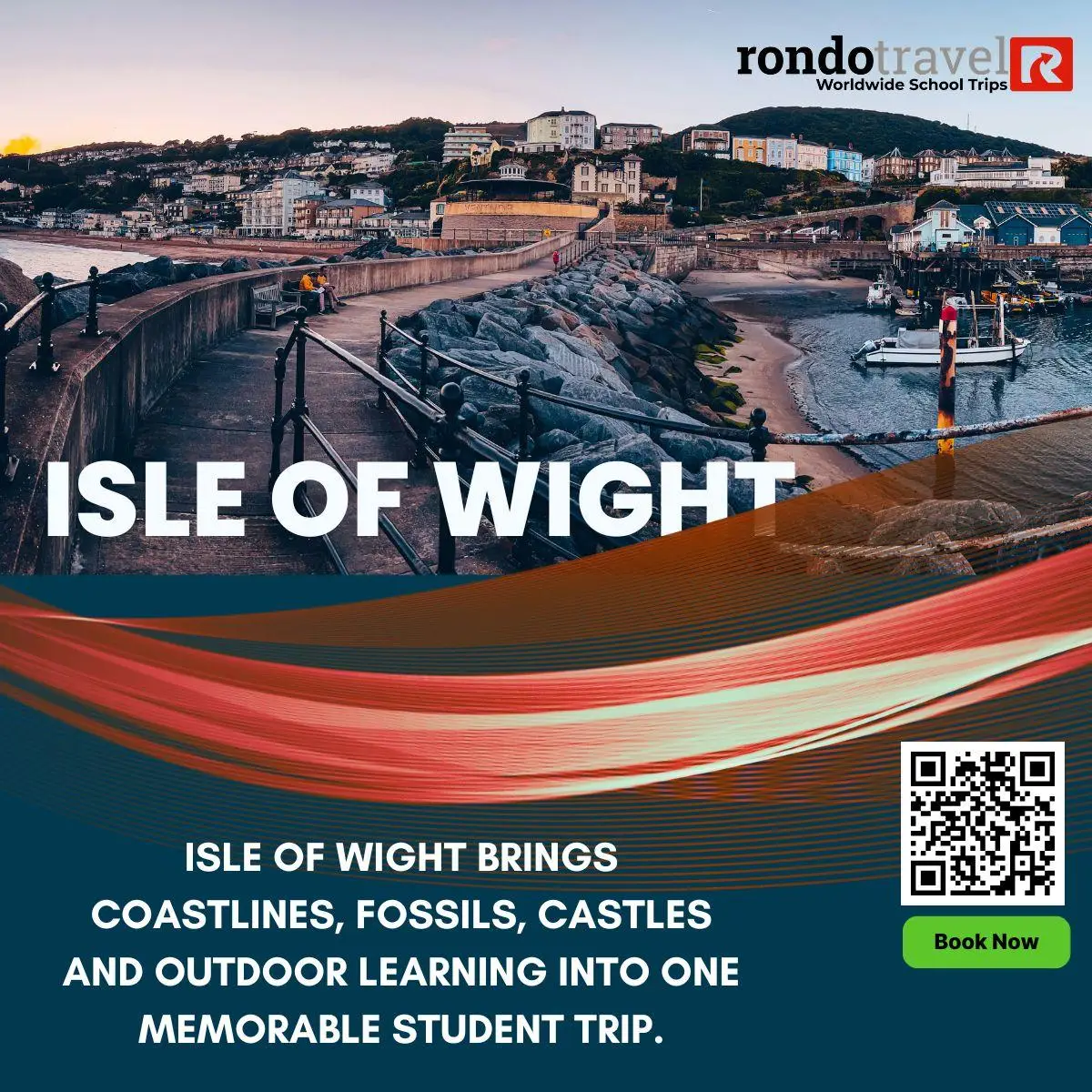
Why the Isle of Wight Works for UK Student Trips
The Isle of Wight sits off the south coast of England, across the Solent from Hampshire. The island covers around 380 square kilometres and combines coast, countryside, towns, woodland, and heritage sites in one compact area. UNESCO describes the Isle of Wight Biosphere as covering the whole island surface and surrounding inshore waters.
This geography suits school groups. You spend less time moving between visits and more time using each place for observation, discussion, and fieldwork. A group begins with Victorian royal history in East Cowes, moves to Sandown for dinosaur fossils, and finishes among the chalk cliffs of West Wight.
What Students Gain Across Three Days
Students study coastal geography through cliffs, beaches, bays, chines, and erosion. They examine British history at Osborne, Carisbrooke Castle, and maritime defence sites. Science learning runs through fossils, geology, habitats, and conservation. Outdoor education builds through walking, cycling, watersports, and group tasks. Cultural awareness grows through towns, villages, food producers, and local life. Personal development comes through shared travel, responsibility, and rising confidence.
The Needles and Alum Bay, Essential Isle of Wight Sightseeing
The Needles stand among the most famous Isle of Wight tourist attractions. These chalk stacks rise from the sea near Alum Bay, with a lighthouse marking the western edge of the island. For your students, the view becomes more than a photograph. The setting explains coastal erosion, geology, tourism, maritime safety, and place identity.
Alum Bay adds coloured sands, cliff views, and boat rides around the western coast. Students see how coastal features shape tourism and local economy. A visit supports geography field notes, sketching, photography, and group discussion.
The Needles Landmark Attraction adds glassmaking, sweet-making, chairlift views, and visitor facilities. For mixed age groups, the site combines education with a sense of occasion.
The Needles Old Battery and New Battery
The Old Battery and New Battery link Victorian coastal defence with later rocket testing and Cold War science. A clifftop visit shows students why the Solent mattered for defence, trade, and naval movement. This area suits history, geography, science, and design technology lessons.
Osborne, Queen Victoria's Royal Home by the Sea
Osborne gives students direct access to Victorian royal life. English Heritage describes Osborne as the private family home of Queen Victoria and Prince Albert on the Isle of Wight. The school visits programme covers the state rooms, family rooms, Durbar Room, grounds, beach, and terrace gardens.
For history students, Osborne moves Queen Victoria from textbook portrait to lived experience. Students walk through rooms used for family, state duties, leisure, and display. The Durbar Room supports discussion around empire, India, art, and political symbolism. Swiss Cottage offers a more personal view of royal childhood and practical education.
Osborne also explains why the Isle of Wight became a fashionable Victorian destination. Sea air, gardens, privacy, and views across the Solent shaped the royal retreat. The visit connects national history with coastal tourism and social change.
Curriculum Links at Osborne
Teachers use Osborne for lessons on Queen Victoria and Prince Albert, Victorian family life, empire and the Durbar Room, royal architecture and gardens, nineteenth century tourism growth, and heritage conservation.
Carisbrooke Castle, Civil War History and Medieval Defence
Carisbrooke Castle gives students a strong encounter with power, conflict, and imprisonment. English Heritage describes the castle as a fortress with origins in an Anglo-Saxon earthwork, later developed by the Normans. King Charles I became the castle's most famous resident after defeat in the Civil War.
This makes Carisbrooke one of the best castles in Isle of Wight for school learning. Students examine walls, a keep, a gatehouse, a chapel, a museum, and the story of royal captivity. They also see how castles changed over time, from defensive sites to heritage attractions.
English Heritage offers school visit resources, free planning visits after booking, and curriculum-linked material for Carisbrooke Castle. Your group benefits before, during, and after the trip.
What Carisbrooke Teaches Students
Students learn how castles used height, walls, and gates for defence. They study how monarchy and Parliament clashed during the Civil War. They follow how King Charles I's imprisonment shaped national history. They see how museums interpret objects, rooms, and personal stories. They link local places with wider British events.
Dinosaur Isle and Fossil Learning in Sandown
The Isle of Wight holds one of Britain's richest dinosaur records. The Natural History Museum describes the island as one of the UK's richest dinosaur fossil sites, with early discoveries dating from the early nineteenth century.
Dinosaur Isle Museum in Sandown introduces students to fossils, palaeontology, and ancient environments. The official museum site lists school and group bookings, learning resources, collections, and research information.
The visit works because students link museum evidence with the coast. A fossil, cast, skeleton, or footprint gains meaning when students then walk near cliffs and beaches where evidence appears. Sandown, Yaverland, Compton Bay, and Brook support wider fossil and geology discussion.
Why Fossil Learning Matters
Fossils help students understand evidence. They learn how scientists read clues from rock, bone, sediment, and location. They also learn why responsible fossil hunting matters. A guided fossil walk gives students safer access, clearer interpretation, and respect for protected sites.
Dinosaur Isle adds strong value for primary groups. Younger students respond well to visible skeletons, reconstructions, and hands-on learning. Older students focus on geology, scientific method, classification, and environmental change.
Shanklin Chine, Coastal Landforms and Natural Atmosphere
Shanklin Chine is one of the most distinctive attractions on the Isle of Wight. A chine is a steep-sided coastal ravine formed by water cutting through soft rock toward the sea. The result gives students a sheltered natural corridor with vegetation, water, rock, and tourism history in one short walk.
For geography groups, Shanklin Chine supports learning around erosion, vegetation, microclimates, drainage, and coastal settlement. For English and art groups, the setting supports descriptive writing, sketching, photography, and sensory observation.
Student Activities at Shanklin Chine
Students record sound, shade, moisture, and vegetation changes. They compare chine formation with open beach erosion. They sketch the landform from different viewpoints. They write short place descriptions using sensory detail. They discuss how natural sites became visitor attractions.
Isle of Wight Steam Railway, Heritage Transport in Motion
The Isle of Wight Steam Railway gives students a moving history lesson. The railway runs through countryside in restored carriages and preserved railway settings. The official education pages confirm school visits suit students from Reception to Key Stage 5, with clear curriculum links.
This experience suits history, engineering, design technology, transport studies, and local heritage. Students see how railways shaped movement, leisure, employment, and tourism. They also learn how heritage railways preserve skills, machinery, buildings, and community memory.
After castles, fossils, and coast, a heritage train journey gives students time to observe the island from a fresh perspective.
Beaches, Coast Paths, and Free Things to Do on the Isle of Wight
The Isle of Wight offers beaches with different learning strengths. Sandown and Shanklin support seaside tourism studies. Yaverland links with Dinosaur Isle and fossil themes. Compton Bay and Brook support geology and coastal observation. Ryde offers broad sands, ferry access, and transport links.
Free activities suit schools because they add flexibility. You use beaches and viewpoints for field notes, sketching, coastal transects, photography, litter surveys, and reflection tasks. These sessions also help manage energy between formal attraction visits.
Free School-Friendly Activities
- Walk a short section of coast path with your group.
- Visit a beach for geography field notes.
- Compare town centres, harbours, and beach resorts along the way.
- Sketch cliffs, bays, and heritage buildings during stops.
- Hold evening reflection tasks at the accommodation.
- Run supervised group photography challenges for variety.
Adventure programmes suit active learners. The island offers walking, cycling, sailing, kayaking, paddleboarding, horse riding, climbing-style attractions, and outdoor challenge sites. Visit Isle of Wight lists scenic coastal walks, cycling routes, beaches, and villages across the island.
These sessions build teamwork and confidence. Students follow instructions, communicate, look after equipment, and respect the coastal environment. For residential trips for primary schools, age-appropriate adventure sessions add structure and energy.
Adventure Learning Outcomes
Students build confidence through guided activity. They practise cooperation and listening. They understand risk awareness in outdoor places. They link physical activity with place-based learning. They experience the island through active movement.
Local Life, Villages, Towns, and Food
Towns and villages help students understand how island life works. Newport acts as the central town. Ryde links ferry, rail, beach, and seafront. Cowes carries sailing heritage. East Cowes connects with Osborne. Sandown and Shanklin show seaside tourism. Ventnor adds steep streets, coastal views, gardens, and south coast character.
Godshill and Shanklin Old Village often feature in discussions about the prettiest village in the Isle of Wight. Both suit short cultural stops, photography, architecture observation, and local economy study.
Food gives students a window into local identity. The Isle of Wight is known for garlic, tomatoes, seafood, cheese, and local drinks. Restaurants, cafés, pubs, farm shops, and beachside dining add a practical view of business studies and local economy.
What the Isle of Wight Is Most Famous For
The Isle of Wight is most famous for The Needles, Osborne, dinosaur fossils, beaches, sailing at Cowes, Victorian seaside history, and coastal scenery. For school groups, the fame becomes useful because the best-known sites also carry strong curriculum value.
The island gained UNESCO Biosphere Reserve status in 2019. The official biosphere site states the award recognises the island's combination of nature, people, and places, with all 33 parishes included. This status supports sustainability learning across tourism, conservation, farming, marine habitats, wetlands, rewilding, and community life.
Isle of Wight 3 Day Itinerary for School Groups
Day 1, Ferry Crossing, Osborne, and Ryde
Your group begins with a coach journey to the port, then crosses the Solent. The ferry introduces island geography, transport, and maritime setting. Students note mainland connections, sea movement, harbours, and arrival points.
After arrival, visit Osborne in East Cowes. Focus on Queen Victoria, Prince Albert, family life, empire, gardens, and royal leisure. In the evening, settle into accommodation. Run a short reflection task linking travel, place, and first impressions.
Day 2, Dinosaur Isle, Fossil Coast, and Shanklin Chine
Start at Dinosaur Isle in Sandown. Students explore fossils, dinosaur remains, geology, and scientific evidence. Add a guided fossil session or coastal observation where suitable.
After lunch, continue to Shanklin Chine. Students compare museum learning with a living coastal landform. The day works well for science, geography, English, art, and photography.
Day 3, The Needles, Alum Bay, and Carisbrooke Castle
Use the final day for the island's western and central highlights. Visit The Needles and Alum Bay for coastal scenery, chalk geology, boat ride options, and tourism study. Add the Old Battery or New Battery for defence history and rocket testing links.
Continue to Carisbrooke Castle for Civil War history, castle design, King Charles I, and museum interpretation. Return by ferry with a clear final discussion. Ask your students, what did the island teach across three days?
How Rondo Travel Supports Your Group
Rondo Travel plans every Isle of Wight school trip around your curriculum, year group, and learning goals. You work with one dedicated contact across booking, ferry coordination, accommodation, attraction entry, and on-trip support. Our supplier network includes trusted hotels, coach operators, ferry routes, and educational sites.
We arrange risk assessments, dietary needs, and safeguarding paperwork. Teachers focus on students. We handle logistics. You receive a clear, costed proposal with no hidden extras.
Practical Planning for School Trips to Isle of Wight
Travel planning starts with the crossing. Wightlink reports crossing times from 22 minutes. Hovertravel runs the Southsea to Ryde passenger hovercraft in under 10 minutes. Red Funnel lists day return vehicle fares from £14 on the checked fares page.
Group cost depends on ferry route, date, coach size, accommodation, meals, attraction entry, staffing, and programme length. Value improves when transport, ferry, accommodation, visits, meals, and support sit inside one planned package.
The best months for school travel include May, June, September, and early October. These months bring better conditions for outdoor learning, manageable visitor levels, and useful daylight for coast and heritage visits.
How Many Days Are Enough for the Isle of Wight?
Three days work well for most UK school groups. The length supports one royal history day, one fossils and coast day, and one landmarks and castle day. A two-day trip suits a shorter theme. A four-day trip allows more time for adventure activities, towns, and outdoor learning.
FAQs About Attractions and Things to Do in Isle of Wight for UK Students
What not to miss on the Isle of Wight?
Your students should not miss The Needles, Osborne, Carisbrooke Castle, Dinosaur Isle, Shanklin Chine, Alum Bay, and the Isle of Wight Steam Railway. These sites link history, geography, science, transport heritage, and outdoor learning.
What are the 8 wonders of the Isle of Wight?
A student-friendly list includes The Needles, Osborne, Carisbrooke Castle, Dinosaur Isle, Shanklin Chine, Alum Bay, St Catherine's Oratory, and Bembridge Windmill. These places give useful variety across history, geography, science, and culture.
What is the most beautiful part of the Isle of Wight?
West Wight gives some of the most dramatic views, especially around The Needles, Alum Bay, Freshwater Bay, and Tennyson Down. Shanklin, Ventnor, and the south coast also offer strong scenic value.
What to do for free on the Isle of Wight?
Free options include beach walks, coastal viewpoints, town trails, village visits, photography stops, outdoor sketching, and supervised coast path sections. These experiences support geography, English, art, wellbeing, and group reflection.
How much is a ferry crossing to the Isle of Wight?
Ferry prices vary by date, route, operator, vehicle type, and passenger numbers. Red Funnel lists day return vehicle fares from £14 on the checked fares page. Wightlink and Hovertravel publish live route and timetable details.
Plan an Isle of Wight School Trip with Rondo Travel
Your students cross the Solent, stand beside chalk cliffs, walk through royal rooms, study fossils, and explore castle walls in three short days. Rondo Travel shapes the journey around your subject focus, year group, and budget. One dedicated trip planner handles ferries, coaches, hotels, attraction entry, and risk paperwork. You receive a clear quote, a tested itinerary, and steady support from enquiry through to return.
Contact Rondo Travel today for a tailored school trip quote, request sample itineraries, or speak with our team about dates in June, July, September, or October and for any other dates for 2026 & 2027.

Make a school trip enquiry with Rondo Travel
If you are interested in hearing a bit more about how Rondo Travel can help you with planning your next school visit then why not get in touch here.