A School Trip to CERN: What to Expect

by PlanMySchoolTrip
published 6 October 2026
What to Expect on a School Trip to CERN
I bet you've heard colleagues say they are taking their GCSE or A Level physics students to CERN for a few days. Everyone knows CERN right - Switzerland, where they made that big hadron collider thing. But what does a trip to CERN actually entail. Here's our short guide...
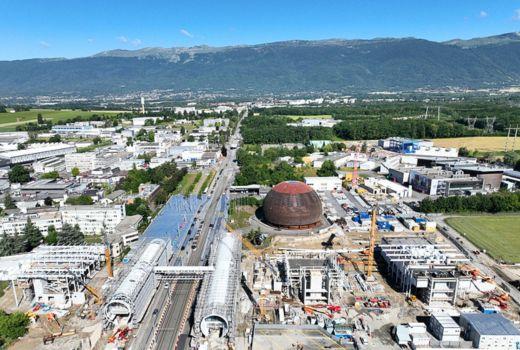
First of all, a CERN school trip will take you to a place near Geneva in Switzerland. The main site is at a place called Meyrin, west of Geneva, on the Swiss-French border. A tram will take you there from your accommodation.
While you won't get to go underground and get hands on smashing sub atomic particles together with the 27km long collider, there is a lot to see and learn and it will give your students the chance to explore some of the biggest questions in science: What is the universe made of? How do we study its smallest particles? And how do scientific discoveries shape everyday life?
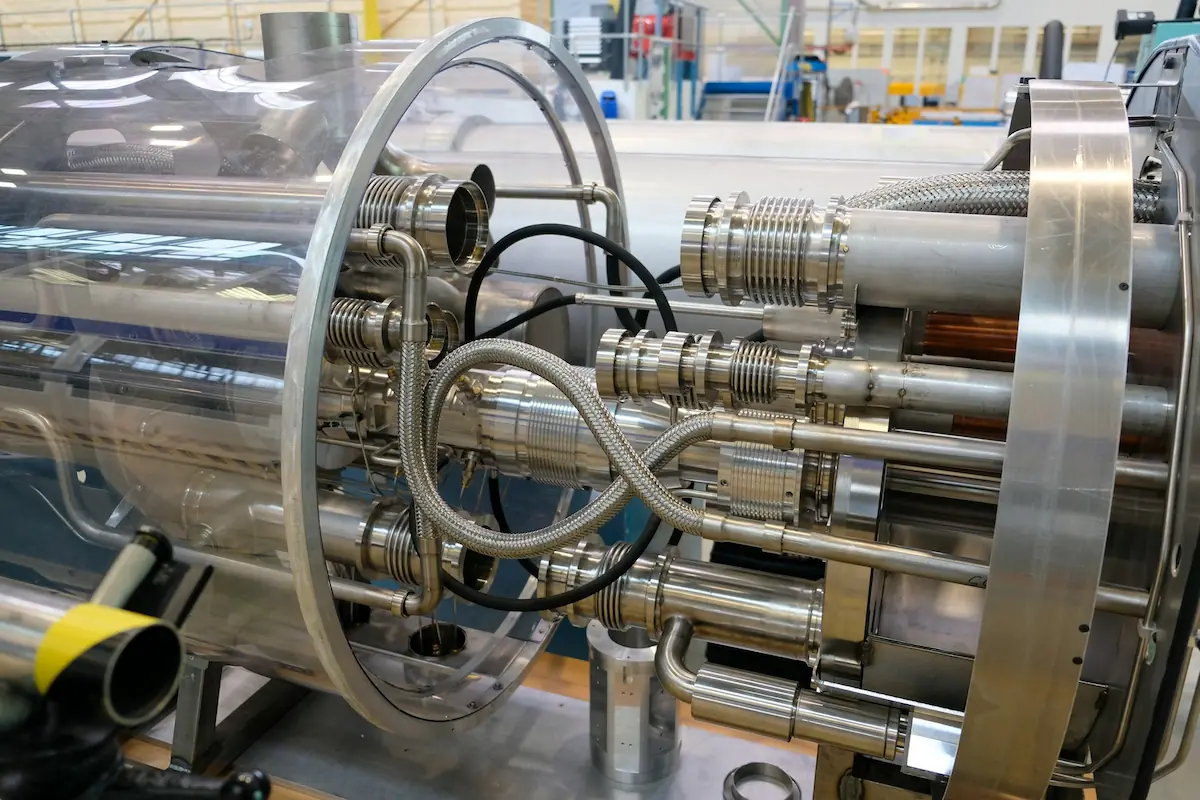
It is usually a short trip - a typical school visit lasts around three days. The itinerary varies by group, travel arrangements and what is open at CERN, but usually combines a visit to the laboratory with science museums, educational activities and a bit of culture time to explore Geneva.
A Typical Three-Day Itinerary
Day 1: Arrive in Geneva
Groups usually arrive in Geneva and settle into their accommodation before exploring the city. Depending on arrival time, the first day may include a walk around the lakeside (Geneva is located at the southern tip of the beautiful Lac Leman), a visit to the historic centre or an introductory activity linked to the trip's science themes.
Teachers may use the evening to introduce CERN and the questions students will explore during the visit. Geneva is also home to international organisations, making it a useful place to discuss how scientists and institutions work across national borders.
Day 2: Visit CERN
The main day is usually spent at CERN, or Conseil Européen pour la Recherche Nucléaire, or the European Council for Nuclear Research. A visit may include a guided session, exhibitions and educational activities. Access to particular facilities depends on CERN's current schedule and safety requirements, so groups should not assume they will be able to enter the Large Hadron Collider or other operational areas.
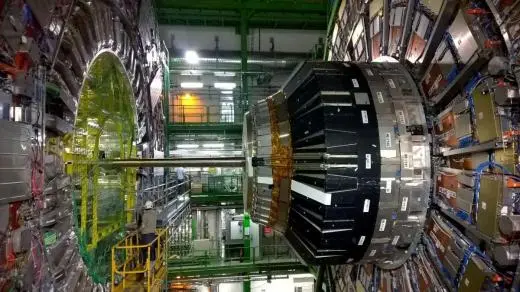
Students learn how CERN investigates the fundamental building blocks of matter. Topics may include particle acceleration, particle detection, antimatter and the forces that govern the universe. They can also explore how scientists collect and analyse enormous amounts of data, and how international teams collaborate on complex research.
CERN is associated with discoveries and innovations that have had a lasting impact, including the Higgs boson. Its work offers a chance to discuss not only physics, but also computing, engineering, communication and the practical challenges of large scale scientific research.
Many groups also visit CERN's permanent exhibitions. The Microcosm exhibition, when available, explores the laboratory's work and the technologies behind particle physics. Exhibitions can introduce ideas such as cosmic rays, fundamental forces, antimatter, time and the vacuum of space.
You will find places to eat on the large campus, so you can make a full day of it, with opportunities to rest and hydrate.
Day 3: Science in Geneva and Departure
The final day often includes another educational visit before the group departs. Options in and around Geneva can help connect CERN's research to wider science topics.
At the SIG Energy Pavilion, students can explore how electricity is discovered, produced and distributed, as well as its environmental impact and the development of renewable energy. The History of Science Museum presents scientific instruments and exhibits relating to fields such as astronomy, meteorology and electricity. Groups may also be able to visit the World Meteorological Organisation or the United Nations headquarters, subject to availability and booking requirements which you should check before you set off.
Your specific itinerary will be guided by your travel company and may be adjusted to fit your travel times. Some groups spend more time at CERN, while others include additional museums or activities.
What Students Learn at CERN
A CERN visit can support classroom learning in physics, chemistry, computing, engineering and related subjects. Depending on the itinerary, students may explore:
- How particle accelerators speed up particles and guide them around a machine
- How detectors record evidence of particle collisions
- The search for fundamental particles, including the Higgs boson
- Antimatter and the questions it raises about the universe
- How scientists use data, computing and mathematical models
- The role of engineering in building and maintaining complex research facilities
- How international teams collaborate on scientific projects
The visit can also help students consider how scientific knowledge develops: researchers form questions, design experiments, interpret evidence and revise their understanding when new results emerge.
Preparing for the Visit
Teachers can prepare students with lessons on atoms, particles, forces, energy or the history of CERN. A simple set of questions to investigate during the trip can help students connect exhibitions and presentations to their studies. Follow-up activities, such as a report, presentation or workbook, can help turn the experience into lasting learning.
CERN's programme and access arrangements can change, and not every visit includes the same facilities or activities. Groups should check current availability and plan their itinerary around confirmed bookings. Your tour operator will help you with this, to get the most from your visit and time at CERN.
Make a school trip enquiry with PlanMySchoolTrip
If you are interested in hearing a bit more about how PlanMySchoolTrip can help you with planning your next school visit then why not get in touch here.